Women’s T20 World Cup Player Performance Analysis 2026
Posted on March 4, 2026 by admin
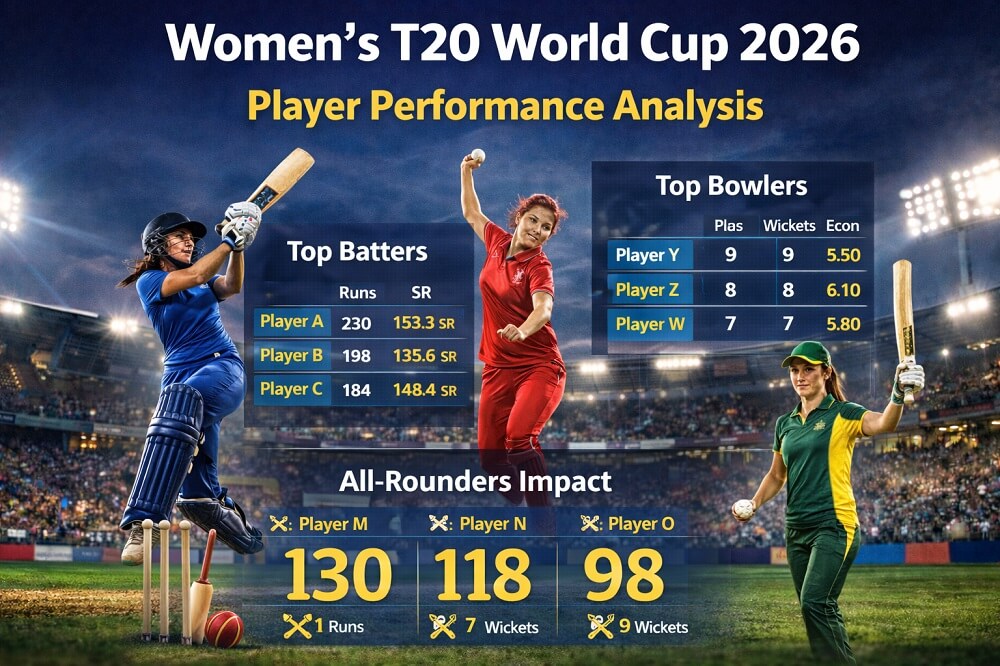
Complete Evaluation Guide for Batters & Bowlers
In international tournaments like the Women’s T20 World Cup 2026, player performance analysis plays a major role in understanding team strength.
While match results are important, detailed evaluation of individual performances provides deeper insight into consistency, form, and impact.
This guide explains how to analyze player performance effectively in T20 cricket, including batting metrics, bowling statistics, fielding contributions, and overall impact assessment. Explore detailed match insights and live engagement options on Cricket Bet99.
Why Player Performance Analysis Matters
T20 cricket is fast-paced and data-driven.
Analyzing performance helps:
✔ Identify consistent contributors.
✔ Understand match impact levels.
✔ Evaluate form trends.
✔ Assess team balance.
Structured analysis improves overall tournament understanding.
Key Metrics for Batting Analysis
When evaluating batters, consider the following:
1️⃣ Total Runs Scored
Consistent run accumulation across matches reflects reliability.
However, runs alone do not define impact.
2️⃣ Strike Rate
Strike rate measures scoring efficiency.
In T20 cricket:
- Higher strike rates indicate aggressive intent.
- Balanced strike rates show controlled performance.
- Consistency in scoring speed is important.
3️⃣ Boundary Percentage
Percentage of runs scored through boundaries shows:
- Power-hitting ability.
- Match acceleration capacity.
- This metric reflects attacking contribution.
4️⃣ Average and Consistency
Batting average combined with strike rate provides better evaluation.
Steady contributions across matches are more valuable than isolated high scores.
Key Metrics for Bowling Analysis
For bowlers, evaluation includes:
1️⃣ Wickets Taken
Regular wicket-taking ability indicates effectiveness.
2️⃣ Economy Rate
Economy reflects ability to restrict scoring.
In T20 format, controlling runs is equally important as taking wickets.
3️⃣ Strike Rate for Bowlers
Measures how frequently a bowler takes wickets.
Lower bowling strike rate indicates higher impact.
4️⃣ Overs During Critical Phases
Performance during:
- Powerplay overs.
- Middle overs.
- Death overs.
- Phase-based evaluation improves accuracy.
Role of All-Rounders
All-rounders contribute in both departments.
Performance evaluation should include:
✔ Batting contributions.
✔ Bowling impact.
✔ Fielding involvement.
Balanced contribution increases team flexibility.
Fielding Performance Analysis
Fielding is crucial in T20 tournaments.
Key indicators:
- Catches taken.
- Run-saving ability.
- Direct hits.
Strong fielders reduce opposition scoring and create pressure.
Consistency vs One-Game Performance
Player analysis should focus on consistency.
One exceptional performance does not define overall impact.
Look at:
- Last 5–7 matches.
- Performance trends.
- Stability across conditions.
- Sustained contribution indicates reliability.
Venue-Based Player Performance
Some players perform better at certain venues.
Consider:
- Batting record at specific stadiums.
- Bowling success in spin-friendly conditions.
- Adaptability across surfaces.
- Venue context improves evaluation quality.
Performance Under Pressure
In tournament matches:
- Knockout games test temperament.
- Close matches reveal composure.
- High-pressure situations highlight leadership qualities.
- Clutch performances increase player value.
Read More: Smart Betting Strategies on Cricbet99 During T20 World Cup 2026
Impact on Team Strategy
Player performance influences:
✔ Batting order adjustments.
✔ Bowling rotation decisions.
✔ Match-up planning.
✔ Leadership strategies.
Consistent performers often receive expanded roles.
Statistical Trend Analysis
Instead of focusing only on totals, analyze:
- Run rate trend.
- Wicket distribution pattern.
- Contribution in wins vs losses.
- Performance improvement over time.
- Trend evaluation gives long-term insight.
Common Mistakes in Player Evaluation
❌ Judging based on single match.
❌ Ignoring strike rate in T20.
❌ Overlooking fielding impact.
❌ Not considering opposition strength.
Comprehensive analysis is necessary.
Role of Data in Modern T20 Cricket
Modern tournaments rely heavily on:
- Performance analytics.
- Match-up statistics.
- Historical data comparison.
- Advanced metrics tracking.
- Data enhances strategic decision-making.
Psychological Impact on Performance
Confidence affects performance.
Players in good form:
- Play more freely.
- Make better decisions.
- Execute shots confidently.
- Mental strength contributes significantly to output.
Long-Term Tournament Impact
Consistent performers:
✔ Support qualification efforts.
✔ Improve net run rate.
✔ Strengthen team balance.
Strong individual contributions often translate into team success.
Balanced Evaluation Approach
When analyzing players:
Consider combination of:
- Runs or wickets.
- Strike rate or economy.
- Consistency.
- Phase performance.
- Venue adaptability.
- Holistic evaluation is most accurate.
Responsible Analytical Perspective
Even strong performers:
- May have off-days.
- Can face difficult conditions.
- Are influenced by match context.
Performance evaluation improves understanding but does not guarantee future results.
Final Conclusion
Player performance analysis in Women’s T20 World Cup 2026 provides valuable insight into:
✔ Team strength.
✔ Tactical planning.
✔ Match impact.
✔ Tournament progression.
By evaluating consistency, efficiency, and phase-based contribution, analysts can better understand player value.
Structured performance assessment enhances tournament comprehension and strategic awareness.
Frequently Asked Questions (FAQ)
1. What is the most important batting metric in T20?
Strike rate combined with consistency is crucial.
2. How should bowling performance be evaluated?
By analyzing wickets, economy rate, and impact during key phases.
3. Why is consistency important?
Because steady performance contributes to long-term team success.
4. Does fielding matter in player evaluation?
Yes, fielding significantly influences match outcomes.
5. Should venue performance be considered?
Yes, pitch and ground conditions affect individual output.
